
Dubai residence visa: from entry permit to Emirates ID
Entry permit, medical test, Emirates ID and family sponsorship: the residence visa steps for a Dubai entrepreneur, in the right order, with the timing points to anticipate.

Receiving the company license is only half of the path. If you plan to live in the UAE, or simply strengthen the coherence of your banking file, the residence visa and Emirates ID should be sequenced with the company setup, not treated as a late formality. Here is the process, step by step.
First: the visa depends on the company setup
For an entrepreneur, the residence visa is usually sponsored by their own company. That means the license must be issued, the establishment card must be in place and the selected package must include the visa quota you need, including family visas if relevant. This quota is decided when choosing the Free Zone or package, not afterwards.
Step 1: the entry permit
The entry permit is the initial authorization that opens the residence process. Depending on your situation, already in the UAE or abroad, it is activated differently: either through an in-country status change or by entering with the permit. This is also when the timeline starts to matter, because the next steps follow within defined windows.
Step 2: the medical test
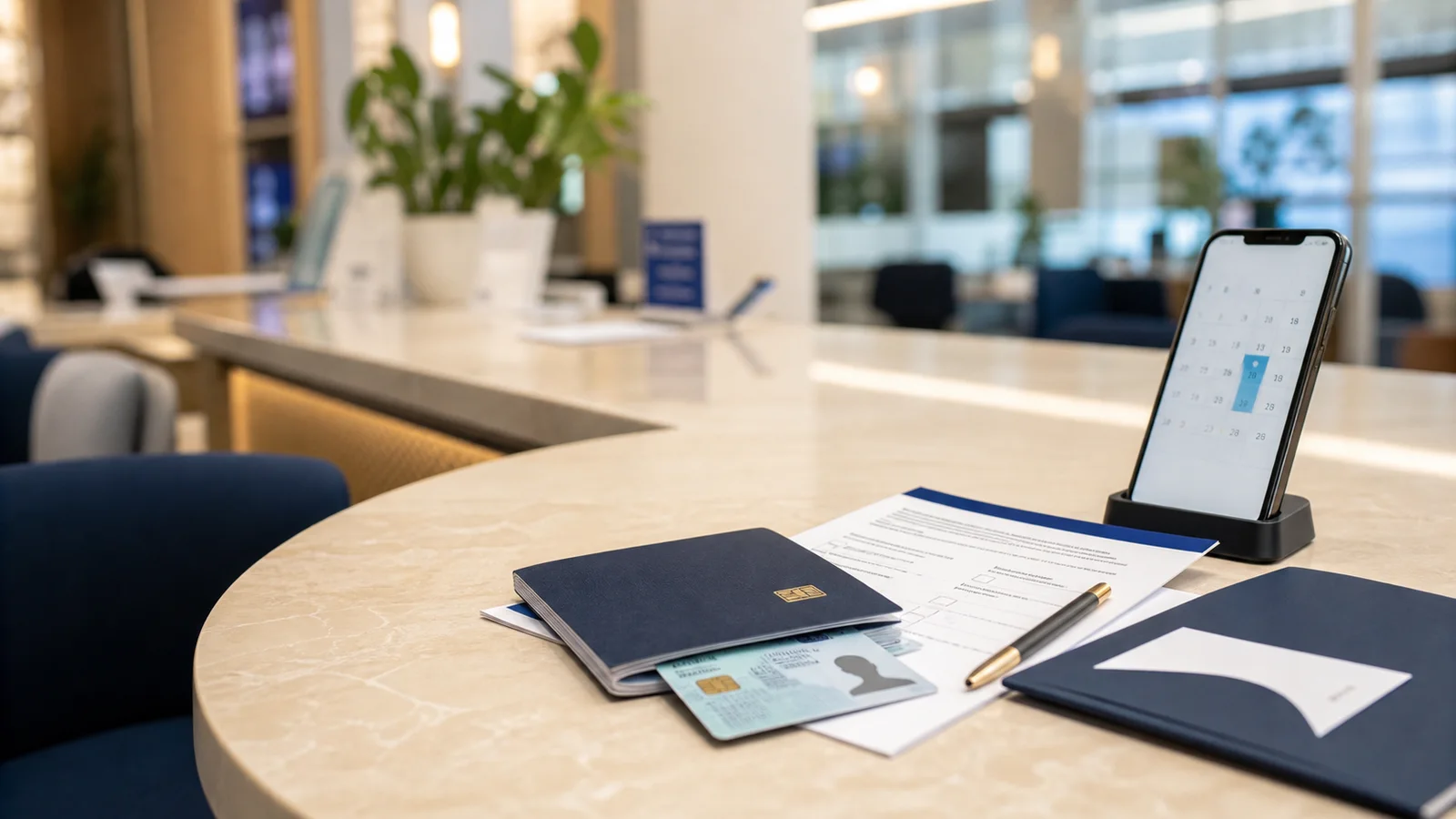
Adult residence applicants complete a medical test, including a blood test and chest X-ray, in an approved center. It is usually quick, but it requires physical presence in the UAE and a booked slot. This point should be planned if you are managing the relocation remotely or through short trips.
Share your situation and travel dates: you receive a priced relocation plan with the steps to anticipate.
Get my priced planStep 3: the Emirates ID
The Emirates ID is the resident identity card. It is used for banking, telecoms, housing, healthcare and most local administration. The application is linked to the residence status and biometric data, and its validity follows the visa. Until you have it, many local steps remain blocked.
Step 4: family visas
Once resident, you may sponsor your family, subject to conditions. The common trap is documentation: marriage and birth certificates, attestations and legalized translations. These documents are often prepared from the country of origin and take time. Preparing them in parallel with the main visa can save weeks.
What the visa changes for banking
A visa does not guarantee a bank account. No serious provider can promise that. It does, however, make the file more coherent: address, presence and a real relocation plan. For a bank assessing a new client, that difference matters.
The most common timing mistakes
- Setting up the company without checking the visa quota included in the package.
- Underestimating the coordination between physical presence, medical test and Emirates ID.
- Starting family documents after the main visa instead of preparing them in parallel.
- Forgetting that residence validity has to be tracked and renewed.
To sequence company, visas, family and banking correctly, describe your project and receive a priced relocation plan within 24 hours, free and with no commitment.